What Is Corporate Transport Planning in Singapore?
Corporate transport planning is a strategic process that helps businesses organize transportation operations, employee mobility, logistics coordination, and event transport requirements efficiently. In Singapore, where traffic conditions, urban development, and business logistics continue to evolve, proper transport planning plays an important role in improving productivity and operational performance.
For a growing business, transportation planning is no longer limited to simply arranging a bus or car service. Modern businesses now rely on integrated transport management systems, logistics management strategies, and transportation planning tools to support employees, clients, and project operations.
What is corporate transport planning? It is the coordination of transport systems, transportation facilities, and mobility strategies based on the needs of a company, event, or organization.
The objective of transport planning is to improve operational efficiency, reduce delays, manage travel demand, and support business continuity in a competitive environment such as Singapore.
Why Transport Planning Matters for Businesses in Singapore
Businesses in Singapore operate in a highly connected and fast-moving environment. The development of transport systems, urban mobility infrastructure, and supply chain operations means that companies need structured transportation planning strategies.
Without the right transport planning process, companies may face:
- Traffic congestion delays
- Inefficient route coordination
- Increased logistics costs
- Poor employee transportation experiences
- Disorganized event transport arrangements
- Delayed project execution
A strong transportation planning programme helps businesses:
- Improve logistics operations
- Support employee transport needs
- Optimize event transport
- Coordinate transportation facilities
- Improve decision making
- Reduce unnecessary transportation expenses
Many organizations in the United States and Singapore now treat transport planning as a foundation of operational success.
The Role of Event Transport in Business Operations
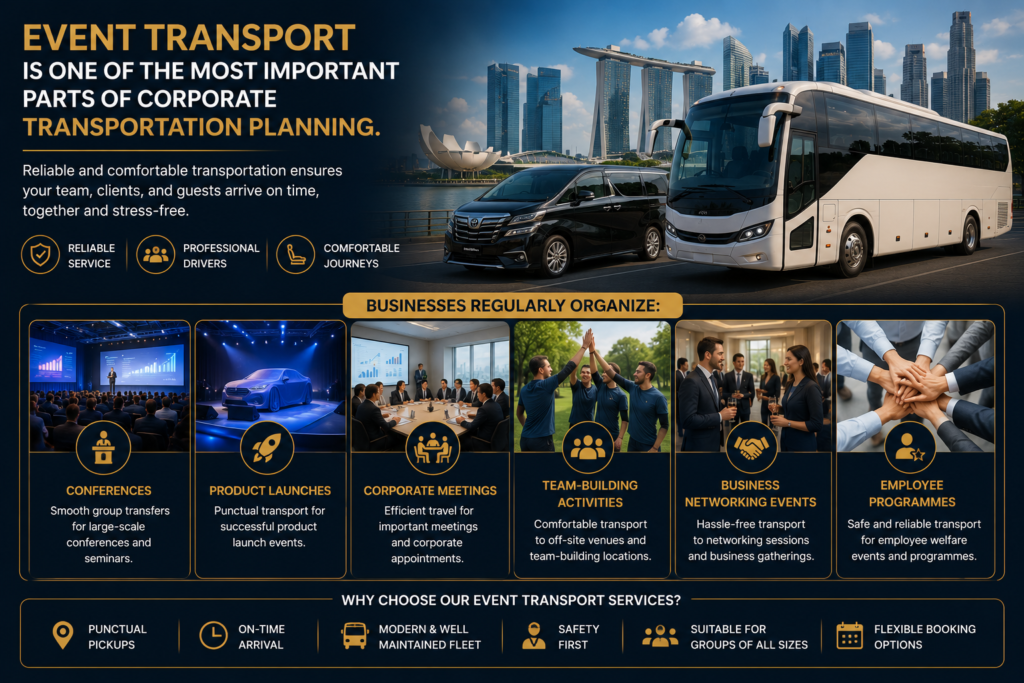
Professional event transport solutions for conferences, corporate meetings, team-building activities, networking events, and employee programmes in Singapore.
Event transport is one of the most important parts of corporate transportation planning. Businesses regularly organize:
- Conferences
- Product launches
- Corporate meetings
- Team-building activities
- Business networking events
- Employee programmes
Each event requires transportation coordination for clients, employees, speakers, and guests.
A professional event transport process helps ensure:
- Timely arrivals
- Efficient transport route coordination
- Better travel experience
- Improved safety standards
- Organized transportation systems
Event transport planning can include:
- Shuttle bus coordination
- VIP car service arrangements
- Airport transportation
- Group transportation management
- Hotel transfer logistics
For a large-scale corporate project, transportation planning becomes even more critical because delays can affect the entire event schedule.
Transportation Planning and Logistics Management
Transport planning and logistics management work closely together in business operations. Logistics management focuses on coordinating resources, movement, schedules, and supply chain efficiency.
Transportation planning supports logistics management by improving:
- Vehicle allocation
- Route planning
- Transportation systems
- Fleet scheduling
- Passenger coordination
- Travel demand management
Businesses often require a wide range of transport solutions based on operational requirements.
This can include:
- Employee transport
- Corporate bus programmes
- Event transport
- Logistics support
- VIP transportation
- Airport transfers
The transport management process is especially important for businesses managing multiple locations in Singapore and Malaysia.
How to Build an Effective Corporate Transport Planning Strategy
Many businesses ask how to improve transportation planning for long-term operational success.
The first step is understanding the transport needs of the business based on:
- Workforce size
- Project requirements
- Event schedules
- Office locations
- Supply chain activities
- Client transportation needs
A transport planner typically evaluates:
- Transport networks
- Traffic conditions
- Transportation system efficiency
- Environmental impact
- Cost optimization opportunities
- Vehicle type requirements
The right transportation planning strategy should include:
- Route optimization
- Scheduling coordination
- Transportation tracking systems
- Risk management
- Safety procedures
- Environmental planning and transport sustainability
With a proper programme in place, businesses can improve operational reliability and employee satisfaction.
Transport Management Solutions for Employee Mobility
Employee transportation continues to be one of the biggest priorities for companies in Singapore.
Many businesses now provide:
- Shuttle bus services
- Corporate bus programmes
- Car service arrangements
- Event transport support
- Group transportation systems
Employee mobility planning helps reduce:
- Transportation delays
- Productivity loss
- Parking issues
- Travel stress
A transport management system can also improve attendance and punctuality.
Companies often coordinate transportation based on:
- Shift schedules
- Office locations
- Employee density
- Travel demand
- Operational timing
The transport process must remain flexible because transportation needs can change frequently.
Transportation Planning for Corporate Events
Corporate events require careful transportation planning to ensure a smooth journey for guests and participants.
Event transport coordination may involve:
- Airport pickups
- Hotel transfers
- VIP transportation
- Group bus transportation
- Conference venue transfers
The planning process includes:
- Route selection
- Vehicle type allocation
- Passenger scheduling
- Transport tracking
- Coordination with the event team
Many businesses use transportation planning tools and transport management software to monitor transport systems during events.
A well-managed event transport programme improves:
- Guest experience
- Operational efficiency
- Brand image
- Safety and logistics coordination
The Importance of Transport Networks and Infrastructure
The development of transport networks plays a major role in modern transportation planning.
Singapore has one of the most advanced transportation systems in the region, including:
- Bus transport
- MRT trains
- Road infrastructure
- Airport transportation facilities
However, businesses still need customized transportation strategies because public transport may not fully support corporate operations.
For example:
- Event schedules may not align with MRT timings
- Certain industrial areas have limited transportation facilities
- Corporate clients may require premium transport services
- Employee transport needs may vary based on location
A transport planner helps businesses identify the right transportation system based on operational goals.
Sustainable Transport Planning and Environmental Considerations
Modern transport planning also includes environmental and sustainability considerations.
Many companies now prioritize:
- Reduced carbon emissions
- Shared transport systems
- Efficient route planning
- Fuel optimization
- Sustainable vehicle use
Planning and transport sustainability are becoming increasingly important for businesses in Singapore and the United States.
Transport strategies can support environmental goals by:
- Reducing unnecessary vehicle usage
- Improving route efficiency
- Encouraging shared transportation
- Optimizing travel demand
Businesses that focus on sustainable transport management often improve operational efficiency while reducing long-term costs.
Technology and Modern Transportation Planning Tools
Technology continues to transform the transport industry.
Modern transportation planning tools help businesses:
- Track transportation systems
- Monitor traffic conditions
- Optimize route planning
- Improve decision making
- Coordinate event transport
- Manage logistics operations
Transport management software can provide:
- Real-time updates
- Fleet monitoring
- Transportation analytics
- Scheduling automation
- Passenger coordination
Businesses increasingly rely on digital systems because transportation planning now requires greater accuracy and flexibility.
The development of intelligent transport systems is expected to continue growing across Singapore and global markets.
Choosing the Right Transport Planner and Transport Services
Selecting the right transport planner is important for businesses managing large-scale transportation operations.
A professional transport planner should understand:
- Transport networks
- Logistics management
- Corporate transportation
- Event transport coordination
- Environmental planning
- Business operations
The right transport services provider should also offer:
- Flexible transportation options
- Reliable support team
- Safety standards
- Route planning expertise
- Scalable transport solutions
Businesses often choose providers with experience managing:
- Corporate events
- Employee transport
- Logistics coordination
- Shuttle bus programmes
- VIP transportation services
Common Challenges in Corporate Transportation Planning
Businesses frequently face transportation planning challenges such as:
- Rising logistics costs
- Changing traffic conditions
- Travel demand fluctuations
- Route inefficiencies
- Coordination problems
- Environmental regulations
Transport planning strategies must remain adaptable because transportation systems continue evolving.
Businesses need to:
- Review transportation processes regularly
- Track transport performance
- Improve decision making
- Update transport programmes
- Coordinate with government agencies
A proactive approach helps businesses maintain operational efficiency.
Why Corporate Transport Planning Is the Foundation of Business Mobility
Corporate transport planning is no longer optional for modern businesses. It is the foundation of efficient transportation systems, operational coordination, and long-term logistics success.
Whether businesses need event transport, employee mobility solutions, shuttle bus coordination, or logistics management support, transportation planning helps improve efficiency and customer experience.
The transport process affects:
- Employee productivity
- Client satisfaction
- Event coordination
- Operational performance
- Business continuity
Companies that invest in transportation planning often gain stronger operational control and improved logistics performance.
Why Businesses in Singapore Choose Professional Transport Services
Many businesses in Singapore choose professional transportation providers because they offer:
- Structured planning programmes
- Event transport expertise
- Reliable transport systems
- Experienced logistics teams
- Flexible transportation services
- Efficient route management
Professional transportation services help businesses focus on operations while transport specialists handle logistics coordination.
From shuttle bus programmes and corporate car service support to event transportation and logistics planning, businesses benefit from working with experienced transport providers.
Conclusion
Corporate transport planning is a critical part of modern business operations in Singapore. As transportation systems continue to evolve, businesses need efficient transport planning strategies to support employees, clients, events, and logistics operations.
Whether managing a corporate project, organizing event transport, or improving supply chain efficiency, transportation planning provides businesses with the tools and strategies needed for long-term operational success.
With the right transportation planning process, businesses can improve logistics management, enhance employee mobility, optimize transportation systems, and create better travel experiences for everyone involved.
